Quick answer. For refrigerator OEM bonding (door gaskets, liner-to-shell, foam-to-steel), industrial freezers, and cold-chain panel manufacturing, the right PU adhesive needs three properties most generic spec sheets ignore: closed-cell stability across thermal cycles, low-temperature flexibility (no embrittlement at -40°C), and food-contact compliance (FDA 21 CFR 175 / EU 1935/2004 / GB 4806). Standard "industrial PU adhesive" usually nails one or two of these. The bondline failures we audit on cold-chain panels are almost always traceable to the third — usually the missing food-contact certification or the missing -40°C cyclic test data. Two-component 4:1 or 5:1 PU adhesives at 7-8 MPa shear, properly catalyzed, are the right baseline. Then it's about specific certifications and field validation.
If you're an R&D engineer or QA lead at a refrigerator OEM, freezer manufacturer, or cold-chain panel plant, this is the buyer's guide we wish more sales engineers handed out.
What "best for refrigerator" actually means
Refrigerator and cold-chain bonding is not just "low temp" — it's a stack of four interacting requirements:
1. Service temperature range
A refrigerator inner liner sits between -25°C ambient (freezer compartment) and +40°C exterior. A commercial freezer panel sits at -40°C inside, +30°C outside (sometimes higher in tropical climates). A cold-chain logistics panel may swing from -30°C to +50°C in service every day. The adhesive needs to retain ≥ 70% of its room-temperature shear at the lowest service temperature, plus survive 1,000+ thermal cycles without bondline cracking.
2. Food-contact compliance
Inner liner-to-shell bondlines, food-zone surface seals, and any adhesive that may shed compounds into refrigerated air must comply with the destination market's food-contact regulation. The big three:
- FDA 21 CFR 175.105 / 175.300 (US — adhesives in food-contact)
- EU 1935/2004 + 10/2011 (EU — broader food-contact materials regulation)
- GB 4806.1-7 (China — food-contact materials and articles)
Plus market-specific add-ons: CertiPUR (US/EU foam, includes VOC), NSF/ANSI 51 (food equipment), Halal certification (for MENA exports).
3. Service life: 8-10 years
Refrigerators don't get replaced in 3 years. OEMs warranty bondline performance for 5-10 years. That means the adhesive must:
- Retain shear strength to 80% of initial after 5 years thermal cycling
- Resist plasticizer migration into the foam core (a common silent failure mode)
- Not yellow visibly through the inner liner
- Hold up to the cleaning chemistries used on commercial freezers (alkali wash, peracetic acid)
4. Production line compatibility
Refrigerator inner liners are typically vacuum-formed ABS or HIPS. Foam cores are typically rigid PU at 30-45 kg/m³. The adhesive needs to bond these without dissolving the plastic skin or degassing the fresh-extruded foam. Open time has to align with the production line's foam-fill-then-press cycle, typically 12-25 minutes for medium-volume lines.
When buyers compare adhesives only on shear strength, they often miss two or three of these. That's where the field failures come from.
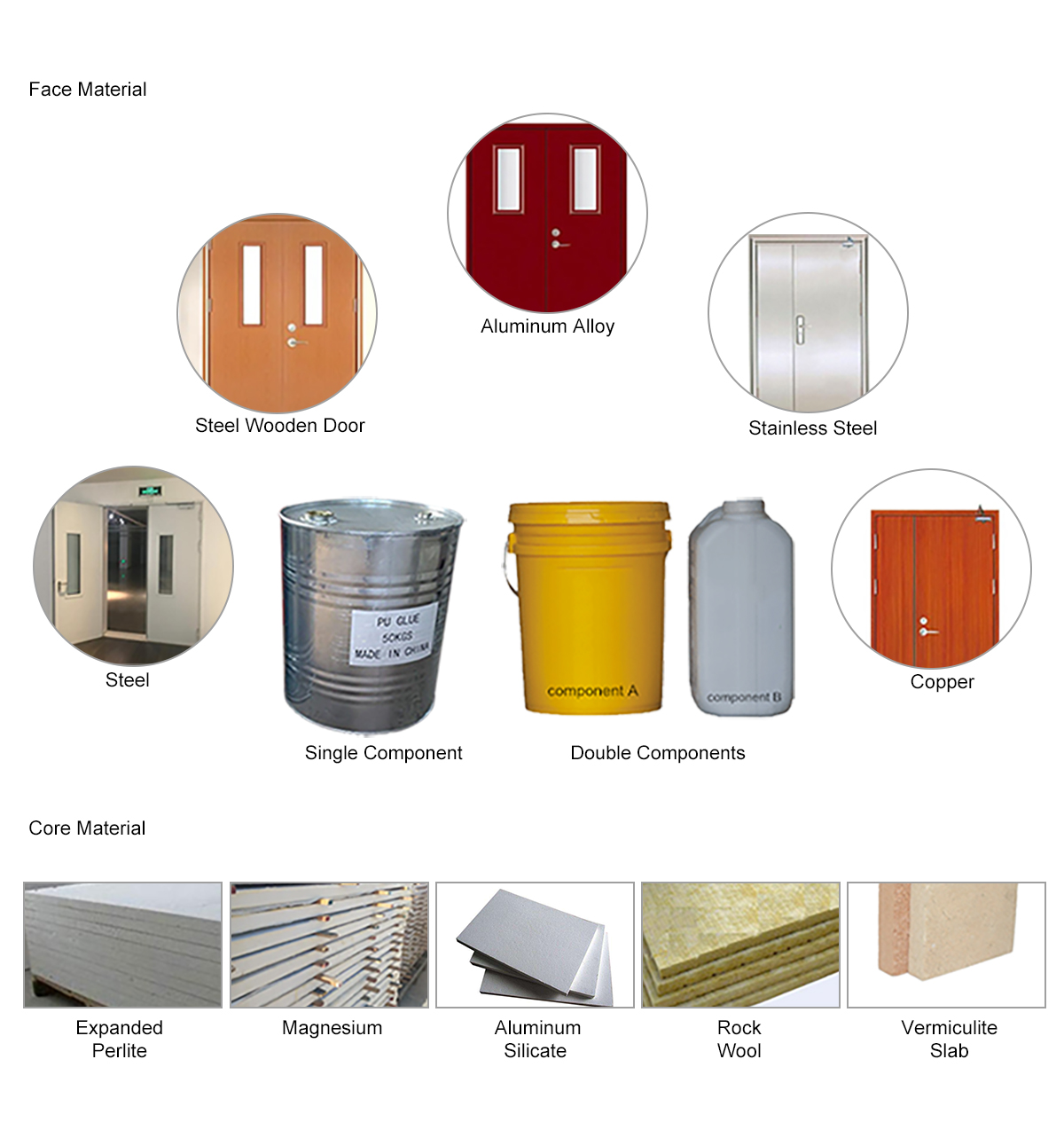
Refrigeration and cold-chain installations push PU adhesive bondlines through tens of thousands of thermal cycles over their service life. Closed-cell stability and low-temperature flexibility are the predictors that matter.
The four PU adhesive types and where they fit
Type 1: Two-component 4:1 (industrial default)
- 7-8 MPa structural shear
- Open time 18-22 min @ 25°C; ~12-15 min @ 35°C (Jakarta-grade humidity)
- Press time 60-90 min cold press
- Industrial default for refrigerator inner liner-to-foam, cold-storage panel cores
- We ship this as our primary system; 5 of 5 Indonesian fire-door OEMs and several regional cold-chain customers run it
Type 2: Two-component 5:1
- Same 7-8 MPa shear
- Open time 22-28 min (slightly longer than 4:1)
- Better for porous substrates (e.g., insulation board with surface roughness)
- Better for hot/humid climates where 4:1 starts to skin too fast
- Customer who's running automatic glue-spreaders calibrated for 4:1 dispensers can drop in our 5:1 with a metering ratio swap; we'll work the dispenser setting
Type 3: One-component (1K) moisture-cured
- 4-6 MPa shear (lower than 2K)
- Cures from atmospheric humidity; no mixing required
- Best for low-volume retrofit work, repair operations
- Not recommended for high-volume cold-chain panel production (humidity-dependent cure is unreliable; production rate variability)
- We do ship 1K but actively counsel new buyers toward 2K systems
Type 4: PU hot-melt
- Different chemistry; reactive PU hot-melts (PUR HMA)
- Some refrigerator OEMs use this for door-gasket bonding at high line speeds
- Specialty product; we don't ship this category currently. If your line uses PUR HMA, we're not your supplier.
Common cold-chain bondline failures (and what causes them)
After 12+ years of working with cold-chain customers, the failure modes cluster around five patterns:
Pattern 1: -40°C cracking (after 18-24 months)
Symptom: Visible micro-cracks at bondline edges, panel delamination on impact.
Root cause: Adhesive lacked low-temperature flexibility validation. The supplier's TDS quoted "service down to -40°C" but their actual cyclic test data went only to -25°C.
Avoid: Ask for shear strength data measured at -40°C, not just static service temperature claim. Real number for industrial PU at -40°C: 5.5-6.5 MPa (vs 7-8 at room temp). Anything claiming "no degradation" is either testing differently or stretching the truth.
Pattern 2: Plasticizer migration into the foam (after 3-5 years)
Symptom: Foam discoloration, bondline weakening, K-value increase.
Root cause: Adhesive contained plasticizers that migrated into the PU foam core, degrading both materials.
Avoid: Specify "non-migratory adhesive" in your spec. Ask about plasticizer content. Modern industrial PU adhesives (4:1 / 5:1) are typically plasticizer-free; lower-grade systems sometimes still contain them.
Pattern 3: Foam degassing / bondline voids (in production)
Symptom: Voids visible in cured bondline, panel delamination on the first batch.
Root cause: Fresh-extruded foam still off-gassing residual blowing agent. Adhesive cured before gas escape.
Avoid: Specify minimum 24-48 hour aging window for foam between extrusion and bonding. Some plants use 7-day buffer for high-precision panels.
Pattern 4: Cleaning chemistry attack (commercial freezers, 1-3 years)
Symptom: Bondline whitening, slow chalking, eventual crack propagation.
Root cause: Bondline exposed to peracetic acid wash or alkali cleaning chemistry, which most PU adhesives don't tolerate.
Avoid: If your customer uses chemical cleaning regimes, ask for chemical resistance data on specific cleaners, not just generic "chemical resistant" claims.
Pattern 5: Open time mismatch on tropical lines (Jakarta, Bangkok, Mumbai)
Symptom: Bondline skinning before press close → voids → first-batch failures.
Root cause: Adhesive specified for 25°C / 50% RH; actual line conditions 32°C / 80% RH. Open time drops 25-35% under these conditions.
Avoid: Ask the supplier for cream-time / open-time data at YOUR shop conditions, not at lab conditions. We've validated 4:1 / 5:1 at 30-32°C / 75-85% RH on Indonesian customer lines.
What we ship for cold-chain and refrigerator OEM
We ship two industrial-grade PU adhesive systems for this segment:
4:1 ratio system — 7-8 MPa shear, validated for refrigerator inner-liner bonding, cold-storage panel cores, and cold-chain logistics panel manufacturing. FDA 21 CFR 175.105 documentation available. Open-time 18-22 min @ 25°C, 12-15 min @ 32°C. Cold-cure variant available for plants below 15°C floor temperature.
5:1 ratio system — Same 7-8 MPa final shear. Slightly longer open time. Better for porous substrates and hot/humid climates. We ship to Indonesian, Vietnamese, and Indian cold-chain customers running this in tropical conditions.
What we're upfront about:
- ⚠️ NSF/ANSI 51 (food equipment): we have GB 4806 and FDA 21 CFR documentation on file. NSF 51 specifically — we're applying, expected completion Q4 2026. If your customer requires NSF 51 today, we're not your fit yet.
- ⚠️ Plasticizer-free: yes, our 4:1 / 5:1 systems are plasticizer-free. Documentation on request.
- ⚠️ Cleaning chemical resistance: we have data on common alkali wash regimes (NaOH up to 5%) but limited data on peracetic acid systems. If your customer specifies peracetic acid wash, request our specific test data before sample.
How to evaluate a PU adhesive supplier for cold-chain
If you're evaluating, here's the technical due-diligence list we'd recommend:
- ✅ Shear strength data at room temp AND at -40°C (not just service temperature claim)
- ✅ 1,000+ thermal cycle test data (-40°C ↔ +40°C, panel-level)
- ✅ Food-contact compliance documentation for your destination market
- ✅ Plasticizer content statement (target: zero)
- ✅ Cleaning chemistry resistance data for your specific cleaners
- ✅ Open-time data at YOUR shop conditions (temperature + humidity)
- ✅ Aging study (5-year accelerated aging, K-value / shear retention curves)
- ✅ Customer references in cold-chain or refrigerator OEM segment (ask for at least 2)
- ✅ MOQ and lead time (sample 500g free, first order typically 1,000 kg)
- ✅ Logistics path to your facility (Indonesia: via Jakarta or Surabaya; expect 14-21 days sea + 3-5 days air for samples)
If a supplier dodges any of items 1-7, that's the signal.
When PUGLUE makes sense for cold-chain OEMs
We're a fit if you:
- Run a refrigerator / freezer OEM line, cold-storage panel plant, or cold-chain logistics manufacturing facility
- Need 7-8 MPa structural PU adhesive at cold-chain spec
- Want food-contact compliance (FDA 21 CFR / GB 4806; NSF 51 in progress)
- Operate in Asia, Russia, or LATAM where Western suppliers' service has eroded
- Want technical engagement (we send our R&D engineer for first-batch validation)
- Need 4:1 or 5:1 ratio flexibility — same shear, different process windows
We're not a fit if:
- Your customer requires NSF 51 today (we're working on it; not yet)
- You need PUR HMA hot-melt (different category; we don't make it)
- Your shop runs single-component 1K only and isn't open to 2K (we counsel 2K but won't refuse 1K)
FAQ
Q: What's the lowest temperature your 4:1 PU adhesive maintains structural performance?
Validated to -50°C in our internal testing; -40°C is the practical service floor for cold-chain logistics. Shear at -40°C is 5.5-6.5 MPa (vs 7-8 at room temp), which retains structural margin for properly designed bondlines.
Q: Do you have NSF/ANSI 51 certification for commercial freezer applications?
Not yet. We have FDA 21 CFR 175.105 documentation and GB 4806 compliance for food-contact. NSF 51 specifically is in our 2026 certification roadmap, expected completion Q4. If your customer requires NSF 51 today, we should discuss whether the timing works for your supplier qualification window.
Q: How do I sample your 4:1 adhesive for a refrigerator OEM trial?
500g sample free via DHL air, 3-5 days to most ports. We ship MSDS in your operating language. Trial protocol: bond your actual liner-foam combination at your line conditions, run thermal cycle test (3 cycles -40°C ↔ +60°C minimum), report results. Our R&D engineer joins the data review via WhatsApp/Telegram within 48 hours.
Q: What's the shelf life of the 4:1 system?
12 months in unopened drums, stored 5-25°C dry. After opening, 30 days for Component A, 14 days for Component B (faster reactivity loss). Standard industrial PU adhesive shelf life.
Q: Do you ship to Indonesia / Vietnam / India?
Yes — primary export markets for our 2K cold-chain systems are Indonesia (5+ fire-door OEM customers), Vietnam, India, and select cold-chain customers in Russia and Brazil. Lead time sea: 14-21 days; air: 3-5 days.
Want our cold-chain bondline test protocol PDF?
If you're an R&D or QA lead validating a PU adhesive for refrigerator, freezer, or cold-chain panel application, we have a free 14-page test protocol PDF covering: -40°C cyclic test methodology, food-contact verification checklist, plasticizer migration screening, open-time field testing, and customer reference template.
Request the protocol PDF + 500g sample — sent within 48 hours via DHL air, costs covered.
If you'd rather start with a 30-min technical call with our R&D engineer (English fluent; Bahasa, Russian, Spanish via translator), book a slot.
PUGLUE / Yongjia Polyurethane Co., Ltd ships PU adhesive and glue-spreading equipment to OEM lines in 12+ countries, including refrigerator, cold-storage panel, and cold-chain logistics manufacturers. 4:1 and 5:1 two-component systems at 7-8 MPa shear. Factory direct, Jiangyin, China. MOQ flexible for first-time validation.
{
"@context": "https://schema.org",
"@type": "Article",
"headline": "Best PU Adhesive for Refrigerator Bonding: A Cold-Chain OEM Field Guide",
"description": "Cold-chain OEMs face -40°C bondline tests, food-contact compliance, and 8-year service life. Why standard PU fails and what 4:1 / 5:1 adhesives actually deliver.",
"datePublished": "2026-04-28T09:00:00+08:00",
"dateModified": "2026-04-28T09:00:00+08:00",
"author": {
"@type": "Organization",
"name": "SPC Team"
},
"publisher": {
"@type": "Organization",
"name": "SPC",
"logo": {
"@type": "ImageObject",
"url": "https://puglue.com/wp-content/uploads/2025/01/spc-logo.png"
}
},
"mainEntityOfPage": "https://puglue.com/best-pu-adhesive-refrigerator-cold-chain-oem/",
"keywords": [
"best glue for inside refrigerator",
"PU adhesive cold storage",
"refrigerator OEM adhesive",
"cold-chain panel bonding",
"food-contact PU glue"
],
"image": [
"https://puglue.com/wp-content/uploads/2025/06/fire-steel-door.jpg"
]
}
{
"@context": "https://schema.org",
"@type": "FAQPage",
"mainEntity": [
{
"@type": "Question",
"name": "What's the lowest temperature your 4:1 PU adhesive maintains structural performance?",
"acceptedAnswer": {
"@type": "Answer",
"text": "Validated to -50°C in our internal testing; -40°C is the practical service floor for cold-chain logistics. Shear at -40°C is 5.5-6.5 MPa (vs 7-8 at room temp), which retains structural margin for properly designed bondlines."
}
},
{
"@type": "Question",
"name": "Do you have NSF/ANSI 51 certification for commercial freezer applications?",
"acceptedAnswer": {
"@type": "Answer",
"text": "Not yet. We have FDA 21 CFR 175.105 documentation and GB 4806 compliance for food-contact. NSF 51 specifically is in our 2026 certification roadmap, expected completion Q4. If your customer requires NSF 51 today, we should discuss whether the timing works for your supplier qualification window."
}
},
{
"@type": "Question",
"name": "How do I sample your 4:1 adhesive for a refrigerator OEM trial?",
"acceptedAnswer": {
"@type": "Answer",
"text": "500g sample free via DHL air, 3-5 days to most ports. We ship MSDS in your operating language. Trial protocol: bond your actual liner-foam combination at your line conditions, run thermal cycle test (3 cycles -40°C ↔ +60°C minimum), report results. Our R&D engineer joins the data review via WhatsApp/Telegram within 48 hours."
}
},
{
"@type": "Question",
"name": "What's the shelf life of the 4:1 system?",
"acceptedAnswer": {
"@type": "Answer",
"text": "12 months in unopened drums, stored 5-25°C dry. After opening, 30 days for Component A, 14 days for Component B (faster reactivity loss). Standard industrial PU adhesive shelf life."
}
},
{
"@type": "Question",
"name": "Do you ship to Indonesia / Vietnam / India?",
"acceptedAnswer": {
"@type": "Answer",
"text": "Yes — primary export markets for our 2K cold-chain systems are Indonesia (5+ fire-door OEM customers), Vietnam, India, and select cold-chain customers in Russia and Brazil. Lead time sea: 14-21 days; air: 3-5 days. ---"
}
}
]
}
{
"@context": "https://schema.org",
"@type": "BreadcrumbList",
"itemListElement": [
{
"@type": "ListItem",
"position": 1,
"name": "Home",
"item": "https://puglue.com"
},
{
"@type": "ListItem",
"position": 2,
"name": "Blog",
"item": "https://puglue.com/blog/"
},
{
"@type": "ListItem",
"position": 3,
"name": "Best PU Adhesive for Refrigerator Bonding: A Cold-Chain OEM Field Guide",
"item": "https://puglue.com/best-pu-adhesive-refrigerator-cold-chain-oem/"
}
]
}
Buying PU Adhesive for Manufacturing?
PUGLUE supplies industrial-grade polyurethane adhesives to fire-door OEMs, refrigerator manufacturers, SIP panel plants and cold-chain producers in 60+ countries. ISO 9001 plant in Jiangyin, China.
✓ Free 200 g sample
✓ 12–20 N/mm² shear · –40°C/+120°C
✓ Reply within 24 h