Why "Best" Polyurethane Adhesive Depends on Your Application
There is no single best polyurethane adhesive for every use case. The right product depends on three variables: the substrates being bonded, the production line throughput requirements, and the service environment the bond must survive. This 2026 buyer guide compares eight industrial polyurethane adhesive formats across the four most common B2B OEM applications — sandwich panel manufacturing, refrigerator and cold-chain assembly, fire-rated door OEM, and structural industrial bonding.
Key Selection Criteria (Quick Reference)
- Cure format: 1-component (1K) moisture-cure for retrofit / low-volume lines, 2-component (2K) for automated high-throughput lines requiring fast cure
- Bond strength: 5–7 MPa typical for 1K, 8–14 MPa for 2K (lap shear on prepared steel)
- Service temperature: standard PU −40°C to +90°C, cold-resistant variants down to −60°C
- Substrate compatibility: PU bonds 12+ industrial substrates without primer; PE/PP/PTFE require primer
- Production-line factor: cure speed, open time, green strength, equipment investment
8 Industrial PU Adhesive Formats Compared
| # | Format | Chemistry | Cure Speed | Best For |
|---|---|---|---|---|
| 1 | 1K moisture-cure | One-component | 2–24h | Retrofit lines, manual application, cartridge dispensing |
| 2 | 2K 4:1 mix | Two-component | 30–120 min | Mid-volume sandwich panel, refrigerator panel |
| 3 | 2K 5:1 mix | Two-component | 20–60 min | High-throughput SIP panel manufacturing |
| 4 | 2K 10:1 mix | Two-component | 10–30 min | Automated reefer trailer / cold chain panel lines |
| 5 | 2K fast-cure | Two-component | 2–10 min | Continuous lamination, demand-driven production |
| 6 | Hybrid PU-silicone | Modified PU | Hybrid cure | Glass-to-frame, transparent / clear bond lines |
| 7 | Cold-resistant PU | Low-Tg modified | 24h full | Below-zero service: cold storage, freezer OEM |
| 8 | Food-grade PU | FDA 175.105 compliant | 12–24h | Refrigerator interior, food-contact processing |

Application 1: Sandwich Panel Manufacturing
Sandwich panel production — bonding metal facers (steel or aluminum) to PU foam, mineral wool, or honeycomb cores — is the largest single use case for industrial PU adhesive globally. Selection drivers:
- Production line speed: continuous lamination (CL) lines need 5–10 minute open time and 30–60 minute green strength
- Bond uniformity: roller-coat or extrusion application requires controlled viscosity (3,000–8,000 cps typical)
- Long-term performance: 25-year panel service life requires PU formulation resistant to hydrolysis and substrate creep
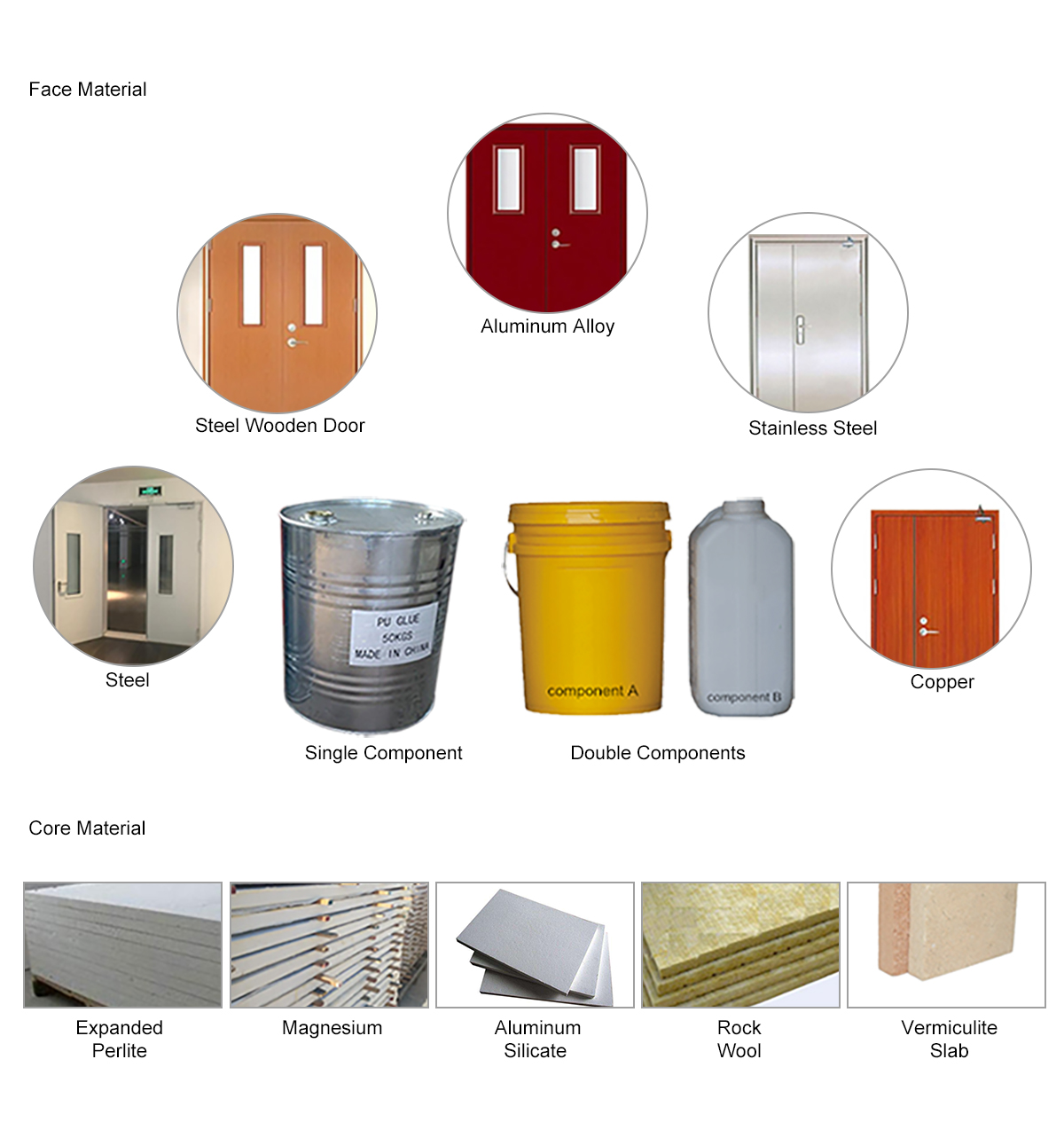
For most sandwich panel OEM lines we recommend 2K 5:1 or 4:1 formulations depending on line speed. Single-component formulations are typically used for repair, retrofit, or batch-mode manufacturing.
See SPC's industrial polyurethane adhesive product line →
Application 2: Refrigerator & Cold-Chain Assembly
Refrigerator and freezer OEM bonding has unique requirements — gasket-to-frame bonds, inner liner sealing, and insulation foam encapsulation must all hold through 1,000+ thermal cycles between −25°C interior and +35°C exterior service. Three sub-applications:
- Magnetic gasket bonding — extruded PVC/TPE gasket to door frame; standard 1K PU is dominant
- Inner liner seal — ABS or HIPS liner to outer steel cabinet; typically 1K PU with food-contact compliance
- Foam injection edge seal — perimeter dam against PU foam expansion; specialized fast-skin formulations
For freezer applications below −25°C continuous, specify the cold-resistant variant with verified 1,000-cycle thermal-shock test data.
See SPC's refrigerator and cold-chain adhesive options →

Application 3: Fire-Rated Door OEM (SNI 8 / EN 1634-1 Compliant)
Fire-rated door manufacturers face strict regulatory compliance — Indonesia SNI 8 (2024), EU EN 1634-1, US UL 10C — that requires the adhesive be tested as part of the assembly. The bond must survive flame temperatures of 800–1,000°C for the rated duration without delamination.
Fire-door PU formulations are typically 2K with intumescent additives or pure PU paired with intumescent edge seals. The bond strength to fire-rated mineral core (rock wool, gypsum, vermiculite) is the critical performance variable.
Application 4: Structural Industrial Bonding
Where structural integrity matters — truck body assembly, RV construction, container manufacturing, structural sandwich panels — bond strength and elongation both matter. Standard structural PU achieves:
- Lap shear (steel-to-steel): 8–14 MPa
- Tensile strength (cured film): 5–10 MPa
- Elongation at break: 250–500% (the elasticity that distinguishes PU from epoxy)
- Fatigue resistance: critical for vibration-loaded bonds (truck, RV, marine)
For structural applications, 2K formulations with controlled mix ratio and verified bond strength documentation are standard.

When PU Is Not the Right Choice
Polyurethane is not always the answer. Consider alternatives when:
- Maximum heat resistance >120°C continuous → silicone or polyurea (PU is not the best for engine compartments, exhaust adjacency)
- Maximum bond rigidity required → epoxy (PU's elasticity is a liability when zero deflection is required)
- Optical clarity required → hybrid PU-silicone or specialty acrylic
- Curing room not available, instant set required → hot-melt or cyanoacrylate
Frequently Asked Questions
Q: 1K vs 2K — which is better for our line?
1K is best for retrofit, manual application, and lower volumes. 2K is best for automated high-throughput lines requiring controlled fast cure and consistent bond strength. Total cost of ownership analysis (including dispensing equipment) usually favors 2K above 1,000 panel/day production.
Q: How do I evaluate a new PU adhesive supplier?
Five-step protocol: (1) request 1L evaluation sample, (2) lab bond strength tests on your actual substrates, (3) accelerated aging (1,000 cycles thermal + humidity), (4) production-line trial run on a non-critical batch, (5) full-volume conversion with parallel old-supplier safety stock for 30 days.
Q: What documentation should I expect from a PU adhesive supplier?
At minimum: TDS (Technical Data Sheet), MSDS (Material Safety Data Sheet), Certificate of Analysis per batch, ISO 9001 certification. For specific applications also expect food-contact compliance (FDA 175.105 / EU 10/2011), fire test data (EN 1634-1 / SNI 8), or REACH compliance documentation.
Q: How long is typical lead time for OEM bulk orders?
For standard formulations from stock: 2–4 weeks. For custom formulations (specific viscosity, color, or compliance requirements): 4–8 weeks. Container shipments to LATAM / Africa typically add 30–45 days ocean transit. Air-freight options for sample and small-volume orders typically 5–7 business days.
Q: Are all PU adhesives the same chemistry under the hood?
No. The polyol component varies significantly (polyester polyol vs polyether polyol), the isocyanate component varies (MDI vs TDI), and additives (chain extenders, cross-linkers, fillers, stabilizers) determine final performance. Two adhesives both labeled "polyurethane" can have radically different bond strength, cure speed, and weather resistance.
Q: Can SPC Adhesives match a competitor's specification?
Yes — for competitor formulations no longer available or where pricing is uncompetitive, SPC offers reverse-engineering and matching service. Required: TDS of the original product + sample. Lead time for matched formulation: typically 4–8 weeks for development + 2-week qualification trial.
Get a Quote or Sample
Industrial polyurethane adhesive selection is best done with the supplier's application engineering team. Provide your application context (substrates, line throughput, service environment, regulatory requirements) and SPC will recommend a matched formulation.
Request OEM quote or evaluation sample → — typical reply within 24 hours during business days.