We are a pu adhesive manufacturer, and our products are widely used in construction, railway transportation, and other industries. When customers purchase polyurethane woodworking adhesives from us, they often tell us they are currently using PVA adhesives but want to try polyurethane adhesives for various reasons. Therefore, this article will focus on analyzing the differences between PU and PVA adhesives and how to choose between them.
What is PVA glue?
PVA glue, commonly known as wood glue, is mainly used for bonding wood surfaces, as the name suggests.
The advantages of PVA glue are its ease of use, long working time of 10 to 15 minutes , which gives you ample time to clamp and secure all parts before it fully cures , and the excess glue is very easy to clean.
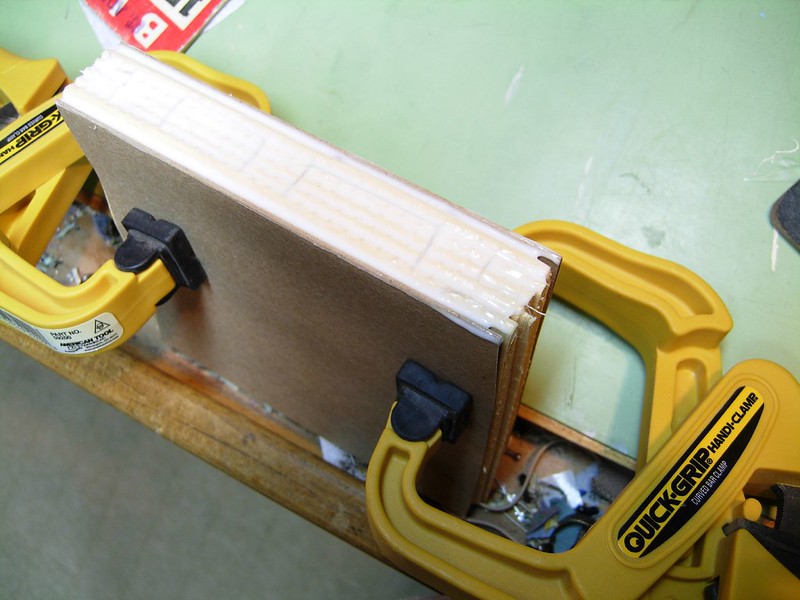
PVA glue is suitable for tight seams; a thin , paper-like layer is sufficient for bonding . However, applying too thin a layer will result in insufficient glue at the seam, while applying too thick a layer will cause gaps to widen and reduce strength .
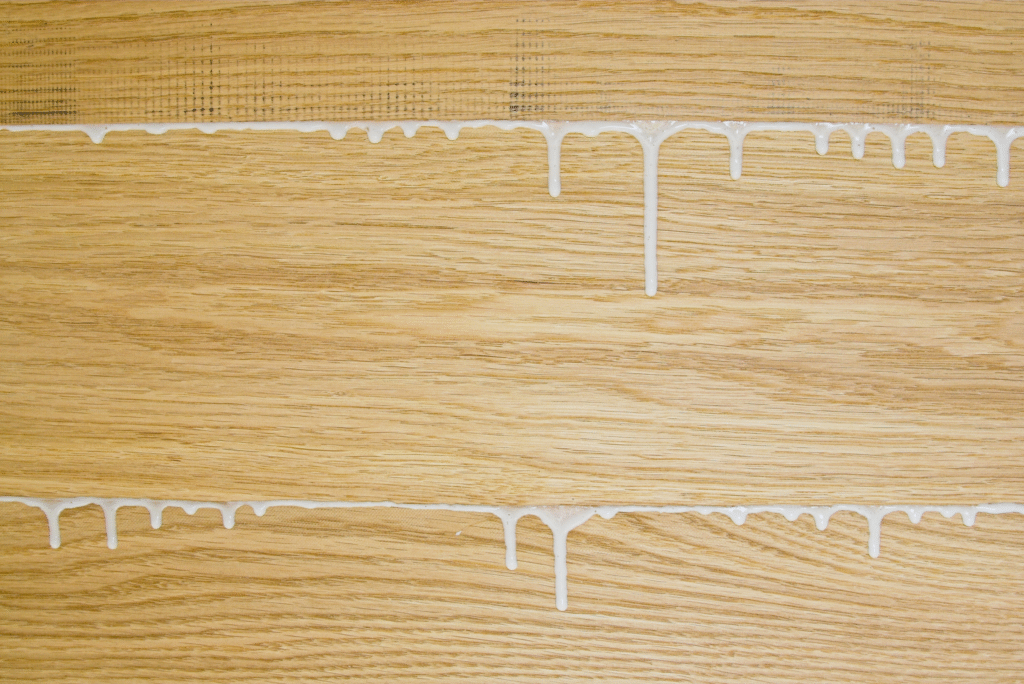
Of course, PVA glue also has its drawbacks. While it is waterproof, it ‘s better suited for dry wood, making it ideal for indoor use or areas that don’t frequently come into contact with water. Furthermore, PVA glue has relatively weak adhesive strength.
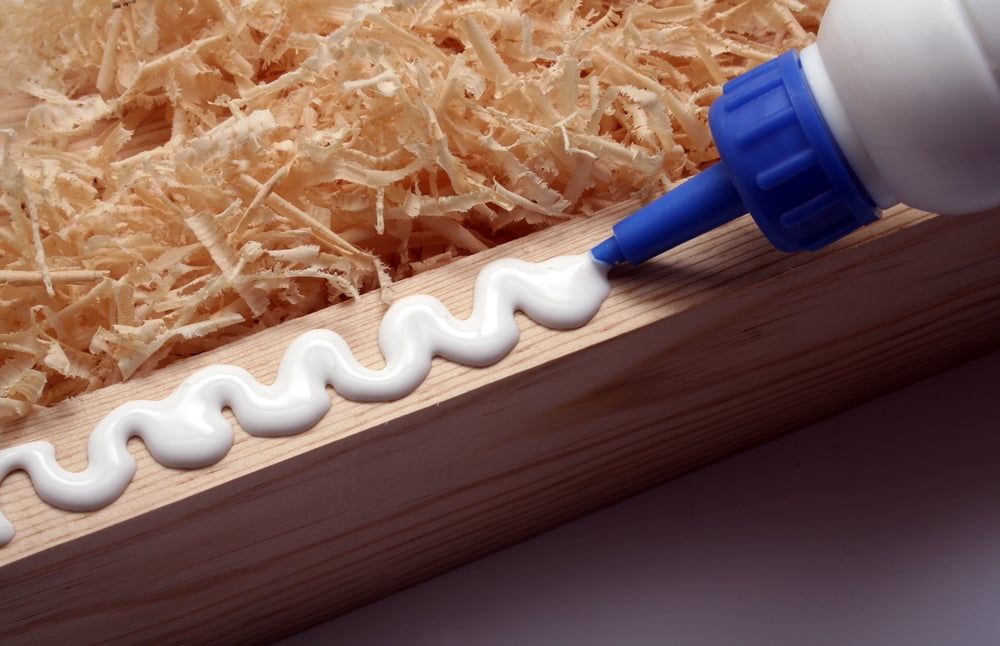
What is PU glue?
PU glue differs from PVA glue; it is suitable for bonding various surfaces such as wood, metal, stone, ceramics, foam, glass, and concrete , and can also expand for use as a sealant.
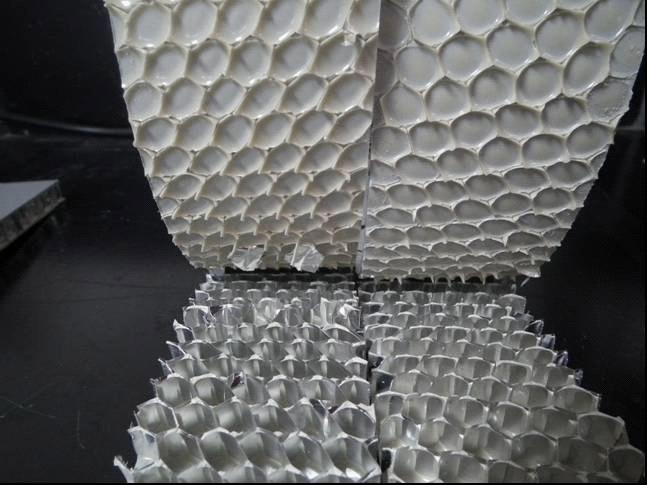
Polyurethane wood adhesive penetrates the wood through a reaction between the adhesive and water , bonding it firmly together . Therefore, it is ideal for bonding slightly damp outdoor wood. However, this also means that for dry wood with a moisture content below 10%, it needs to be wiped or sprayed with water before bonding.
Polyurethane wood glue becomes harder after curing and can absorb solvent-based stains, making it ideal for covering glued areas, while PVA can only be stained in its liquid state.
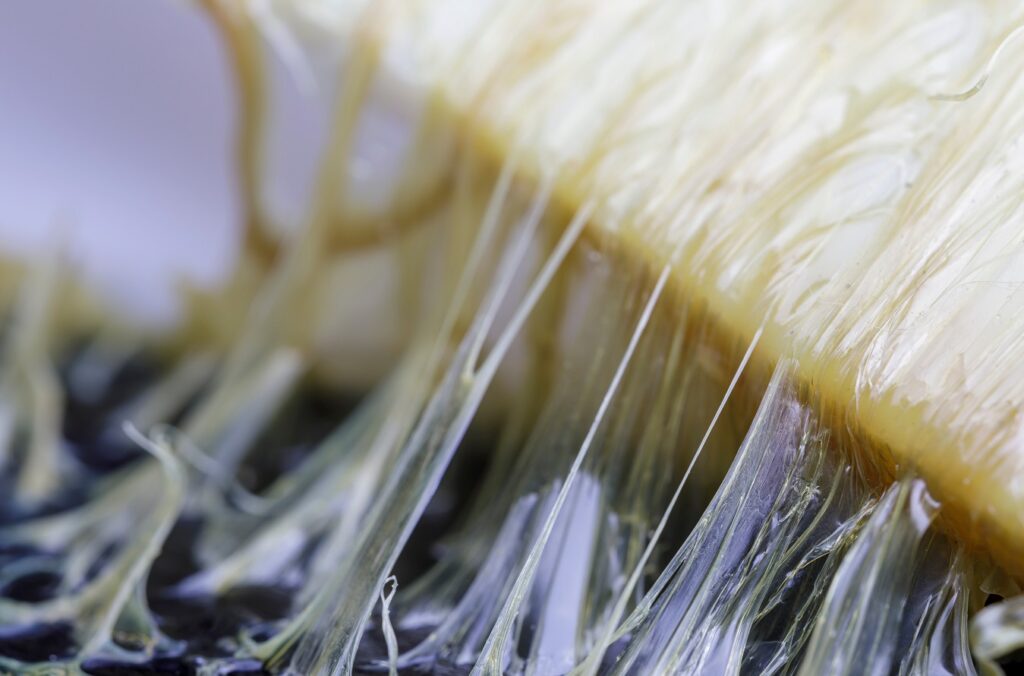
Difference between PVA glue and PU glue
The main differences between polyurethane (PU) adhesives and PVA adhesives lie in their composition, curing process, material compatibility, and water resistance.
Characteristic | Polyvinyl alcohol (PVA) adhesive | Polyurethane (PU) adhesive |
Main uses | It is mainly used for bonding wood together (e.g., furniture, general assembly). | It has a wide range of applications and can bond a variety of materials, including wood, metal, glass, stone and ceramics. |
Curing process | The curing process involves the evaporation of moisture or its absorption by the porous material; air drying is required. | It cures by reacting with moisture in the air or material; it expands after curing. |
Waterproof | Standard polyvinyl alcohol adhesive is not waterproof (water-soluble). Specific formulations (D3, D4) have waterproof/moisture-proof properties. | It has good waterproof performance and is suitable for outdoor and humid environments. |
Gap filling | It does not have the function of filling gaps; it requires a tight and smooth surface to adhere firmly. | It expands after curing, effectively filling gaps and bonding irregular surfaces. |
Clean | It is easy to wash with water after contact with water; it turns transparent or pale yellow/white after drying. | It will be quite messy during use; it needs to be cleaned with a solvent (such as acetone or mineral oil) before curing. |
Strength | In certain wood applications, it can be glued firmly, often with a strength exceeding that of the wood itself. | It forms an extremely strong and durable bond; in wood applications, its strength is comparable to that of polyvinyl alcohol (PVA) glue, but it performs better in multi-material projects. |
In short:
- PVA adhesive is suitable for indoor, all-wood, tight-joint projects that are not exposed to moisture.
- PU adhesives are suitable for projects involving a variety of materials, outdoor applications, or projects requiring good gap-filling properties and high waterproof performance.
How to choose PVA glue and PU glue
- For most interior wood bonding applications, PVA adhesives should be chosen if ease of use, water-washing and cleaning, and cost are the main considerations .
- If your project involves multiple materials, outdoor use, damp wood, or requires filling gaps, choose polyurethane adhesive. Be prepared for a potentially messy application process and ensure good ventilation.
Summarize
PVA adhesives are easy to use, economical, and suitable for traditional indoor woodworking projects ; PU adhesives have high strength, strong weather resistance, and wide material compatibility, making them suitable for outdoor or demanding industrial applications. They are suitable for projects requiring long-term stable bonding in humid or complex environments .