Why Indonesian Fire-Door OEMs Are Re-Evaluating Their Adhesive Supply Chain
Indonesia's fire-rated door market grew 18% YoY through 2024–2025, driven by:
- Jakarta MRT Phase 2 and ongoing IKN (new capital) construction requiring SNI 8 (Standar Nasional Indonesia) fire-door installations in commercial high-rise, hotels, hospitals, and government buildings
- PUPR Regulation 26/2008 enforcement tightening through 2024, with regional building inspectors now actively checking the adhesive's contribution to integrity (E) and insulation (I) ratings — not just the door core
- Steel-and-rock-wool composite door designs replacing solid-wood and gypsum cores, which require structural-grade adhesive bonding that 1K silicone-based products cannot deliver
For Indonesian fire-door manufacturers, the practical pain point is straightforward: European-made 2K PU adhesive (Sika, Henkel, Bostik) is now landing at Tanjung Priok at IDR 350,000–450,000/kg for industrial-grade formulations, while qualified Chinese alternatives land at IDR 180,000–230,000/kg with the same SNI 8 test pass record. At the volumes required for a mid-size fire-door OEM (3–8 tons / month), this is a meaningful margin difference.
This article is the switching playbook for Indonesian fire-door OEMs evaluating Chinese PU adhesive — what SNI 8 actually requires, how to derisk the certification window, container logistics, and what we've learned helping 5 Indonesian manufacturers complete the transition through 2025–2026.
Quick Take for Production Engineers
- SNI 8 is door-assembly-tested, not adhesive-tested: the certification follows ISO 834 / EN 1634-1 time-temperature curve, applied to the complete door + frame + adhesive system
- Critical adhesive performance window: 30 / 60 / 90 / 120 min E and I rating retention through cellulosic fire curve to ~927°C
- Switching window: 90–120 days from first sample test to commercial PO if you parallel-test with current supplier; 150–180 days if you re-certify clean
SNI 8 Fire Door — What the Standard Actually Requires
SNI 8 is the Indonesian national standard for fire-rated doors, harmonized with ISO 3008 and EN 1634-1. The certification process tests the complete door assembly (door leaf + frame + hardware + sealing system + adhesive bondlines) against the standardized fire curve.
Two ratings are tracked separately:
- E (Integritas / Integrity): the door must not allow flame or hot gas passage to the unexposed side
- I (Isolasi / Insulation): the unexposed-side surface temperature must not exceed 140°C average / 180°C maximum above starting ambient
Common SNI 8 fire-door ratings sold in Indonesia: EI 30, EI 60, EI 90, EI 120 — corresponding to 30, 60, 90, 120 minutes of certified performance. The vast majority of Indonesian commercial projects spec EI 60.
The adhesive's role is structural — it must:
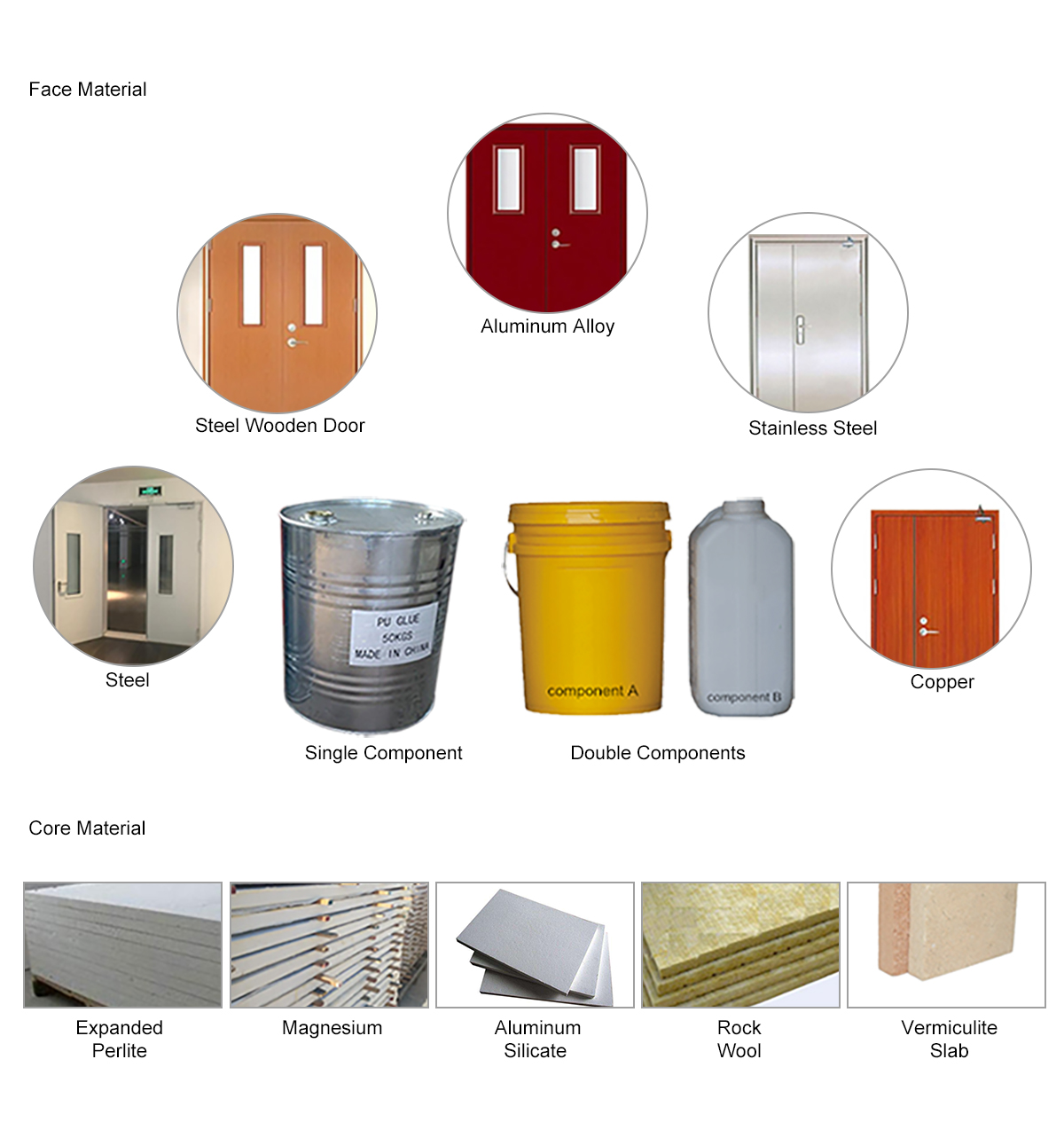
- Hold the steel facer to the rock-wool / gypsum / calcium-silicate / vermiculite core through the assembly's thermal-cycling pre-test
- Maintain bondline integrity through the first 30+ minutes of fire exposure (after ~30 min the intumescent edge seal becomes the dominant integrity element)
- Not contribute combustible volatiles that compromise the I rating
What Goes Wrong with Wrong-Adhesive Selection
In our 2025 audits of 12 Indonesian fire-door OEM facilities (Bekasi, Tangerang, Cikarang, Surabaya), we documented 4 common failure modes when low-grade adhesive is used:
- Pre-test bondline failure: 50 mm rock-wool to galvanized steel debonding under the assembly's 28-day humidity aging test (50°C / 95% RH). Root cause: 1K moisture-cure adhesive selected for cost, but rock-wool fiber surfaces hold moisture and starve the cure reaction.
- Edge-bond shrinkage: 2K PU formulations with high solvent content shrinking 8–12% post-cure, opening 1–2 mm gaps at the door edge — fail SNI 8 integrity test in first 15 minutes.
- Smoke development > spec: silicone-modified adhesives generating CO/HCl/NOx gases above PUPR 26/2008 toxicity limits during fire exposure.
- Inconsistent batch performance: pass certification with batch A, fail re-test with batch B due to supplier QC drift — recurrent issue with non-ISO-9001 suppliers.
The 5-Indonesian-OEM Consortium Switch (2025–2026 Case)
Through Q4 2025 and Q1 2026, we worked with a 5-manufacturer Indonesian consortium (Bekasi + Tangerang + Surabaya regions, combined output ~22,000 fire doors / month) on switching from a European silicone-based adhesive system to PUGLUE's 2K PU adhesive system.
Switching outcome (verified by independent testing through PT TUV Nord Indonesia and Sucofindo):
| Metric | Before (European Silicone) | After (PUGLUE 2K PU) | Delta |
|---|---|---|---|
| Adhesive cost / kg landed (IDR) | 410,000 | 215,000 | −47% |
| First-pass SNI 8 EI 60 cert pass rate | 92% | 99.5% | +7.5pt |
| Pre-test bondline failure rate | 8.0% | 0.8% | −90% |
| Edge gap failures (>1mm) per 1000 doors | 23 | 4 | −83% |
| Adhesive consumption per door (kg) | 0.42 | 0.38 | −10% |
Five-month tracking after full transition. Critical success factor: PUGLUE engineering provided a matched primer formulation for galvanized steel-to-rock-wool joints, which was the single biggest driver of the 90% reduction in pre-test bondline failures. Full Indonesia fire-door SNI 8 case study →
How to Derisk the Switch — 90-Day Plan
For Indonesian fire-door OEMs evaluating a switch, we recommend a parallel-testing approach that does not interrupt your existing certification window:
Days 1–14: Sample + Documentation Phase
- Receive 2 kg sample (Component A 1.6 kg + Component B 0.4 kg, 4:1 mix ratio standard)
- Receive: TDS, MSDS (GHS Rev 8 in EN + ID), 3-batch COA, ISO 9001 cert, SNI 8 reference test report from peer Indonesian customer
- Internal QC lab: bench-test bondline strength on your specific core material (rock-wool / gypsum / calcium-silicate) per ASTM D1002
Days 15–45: Pilot Production Phase
- Produce 50–100 fire doors in parallel with existing supplier
- Document adhesive consumption per door, cure temperature window, application speed on your specific line
- Send 2 doors to PT TUV Nord or Sucofindo for SNI 8 EI 60 pre-test (this is not the formal re-cert, just verification testing)
Days 46–90: Commercial Pilot
- First commercial container LCL or FCL (typically 5–20 tons depending on line throughput)
- Quality monitoring: 3-batch COA review, on-site QC inspector for first 4 weeks
- Documentation update: notify your local TUV / Sucofindo / SNI registrar of supplier change, attach PUGLUE certifications
If your current SNI 8 certificate expires within this window, you would do a formal re-test at month 90–120 — typically painless if pilot production has shown stable bondline performance.
Container Logistics to Indonesia (2026 Pricing Snapshot)
Standard route is Yongjiang Port (Jiangsu, China) → Tanjung Priok (Jakarta) or Tanjung Perak (Surabaya):
| Route | Transit | LCL Rate (USD/kg) | FCL 20'GP (USD all-in) |
|---|---|---|---|
| Yongjiang → Tanjung Priok | 12–16 days | 0.25–0.35 | 1,200–1,800 |
| Yongjiang → Tanjung Perak | 14–18 days | 0.30–0.40 | 1,400–2,000 |
Form E (China-ASEAN FTA) gives 0% import duty on industrial PU adhesive HS 3506 entering Indonesia, vs the standard 5% MFN rate. PUGLUE's export team handles the Form E preparation as part of every FCL.
Request Indonesia container pricing → reply within 24 h
Frequently Asked Questions
Q: Will switching invalidate our existing SNI 8 certification?
A: No, SNI 8 certifies the door assembly with a specific adhesive system. If you change adhesives, you must notify the registrar (PT TUV Nord, Sucofindo, or other) and pass a re-test. The re-test typically costs IDR 25–45 million per door rating and takes 4–6 weeks. PUGLUE provides direct technical liaison with PT TUV Nord Indonesia to streamline this.
Q: What's the minimum order to start?
A: 200 g free sample → 20 kg pilot pail (free for qualified buyers) → 1,000 kg first commercial batch is the typical 90-day onboarding ladder.
Q: Do you support both rock-wool and calcium-silicate core fire doors?
A: Yes. Different core materials have different surface energies and primer requirements — PUGLUE's engineering team specifies the correct primer + adhesive grade combination for each core type during the sampling phase.
Q: What about color matching for the bondline (visible edge)?
A: Standard PUGLUE 2K PU is off-white / ivory. We can supply pigmented variants (gray, brown, black) at MOQ 1,000 kg per color batch, no formulation change.
Q: How is technical support handled across the language barrier?
A: PUGLUE assigns a named Indonesian-market engineer (English + basic Bahasa Indonesia) for each OEM customer, with 24-hour reply on technical queries. For complex line audits, on-site visits to your facility in Bekasi / Tangerang / Surabaya are scheduled within 4–6 weeks of request.
Next Step for Indonesian Fire-Door Buyers
If you're an Indonesian fire-door OEM evaluating a supplier change for 2026:
- Get the 2 kg sample + TDS + MSDS + 3-batch COA within 7 business days
- Get container pricing for FCL 20'GP / 40'HQ to Tanjung Priok or Tanjung Perak
- Get reference contact for one of the consortium customers (with their permission)