
PU Adhesive for Railway Ballast
Two-component polyurethane ballast binder (PU-50D, A : B = 3 : 2) sprayed into the track bed — it locks the ballast against displacement, cures to a tough permeable elastomer, cuts rail wear and noise, and still lets the bed drain.
A ballast binder that stabilizes and still drains
PUGLUE PU-50D is a two-component polyurethane ballast adhesive (A : B = 3 : 2) made for high-speed and conventional rail. Sprayed into the ballast, it bonds the stones strongly and cures to an insoluble, non-melting hard elastomer that withstands heavy impact without shattering the ballast — locking the bed against displacement, reducing rail wear, extending track life and damping noise. Crucially the glue line does not block moisture or air, so the bed stays stable yet still drains rainwater. Tensile ≥15 MPa, tear ≥50 N/mm, hardness 70±3 Shore D, water- and cold-resistant.
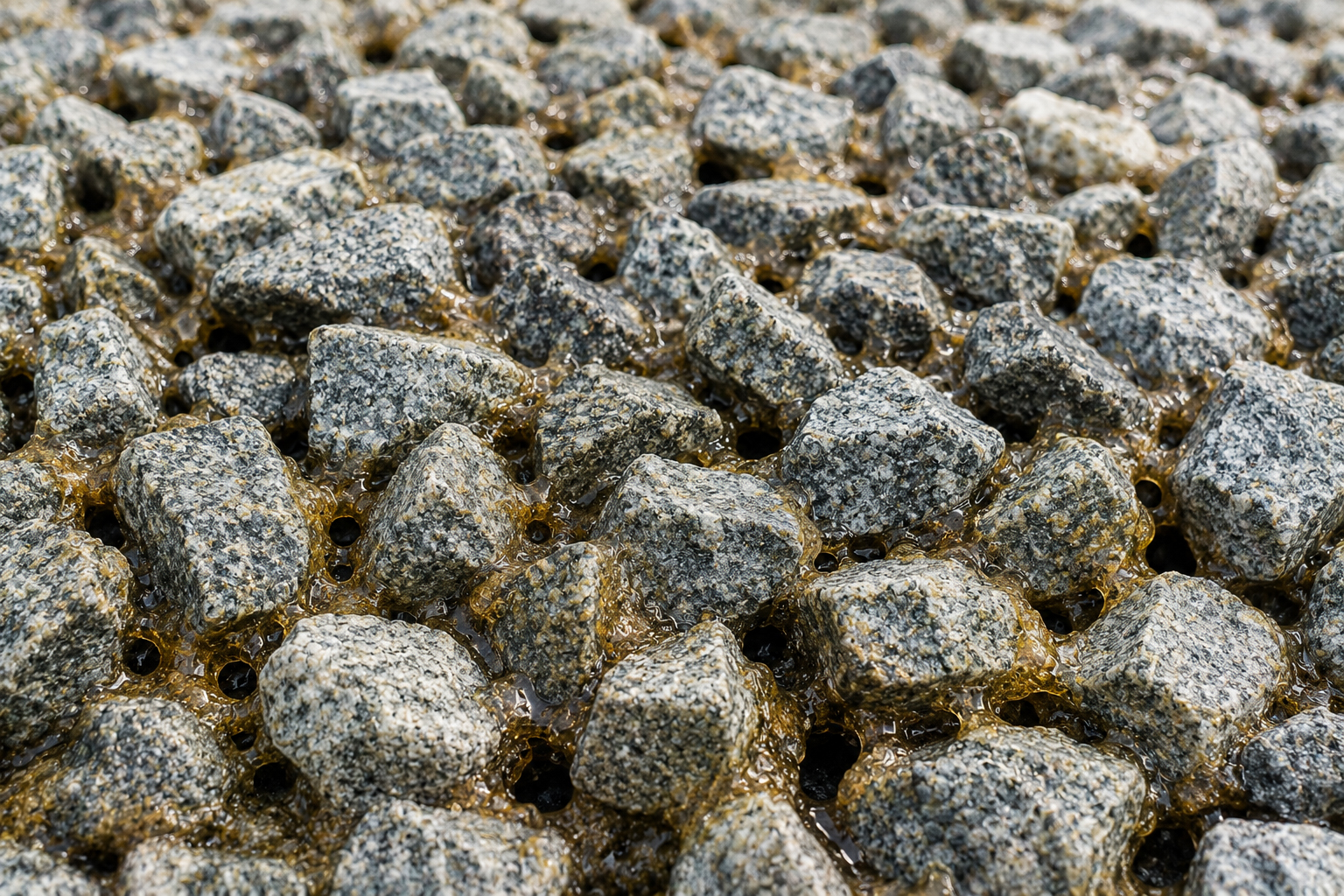
What Ballast Glue Does
One sprayed-in PU binder turns loose track ballast into a stable, durable, draining bed.
Stabilizes the bed
- Locks ballast against displacement
- Reduces rail & sleeper wear
- Extends track service life
Keeps draining
- Glue line stays moisture- & air-permeable
- Rainwater drains freely
- No water-trapping or pumping
Tough & durable
- Hard elastomer, impact-resistant
- Tensile ≥15 MPa, tear ≥50 N/mm
- Water- & cold-resistant, noise-damping
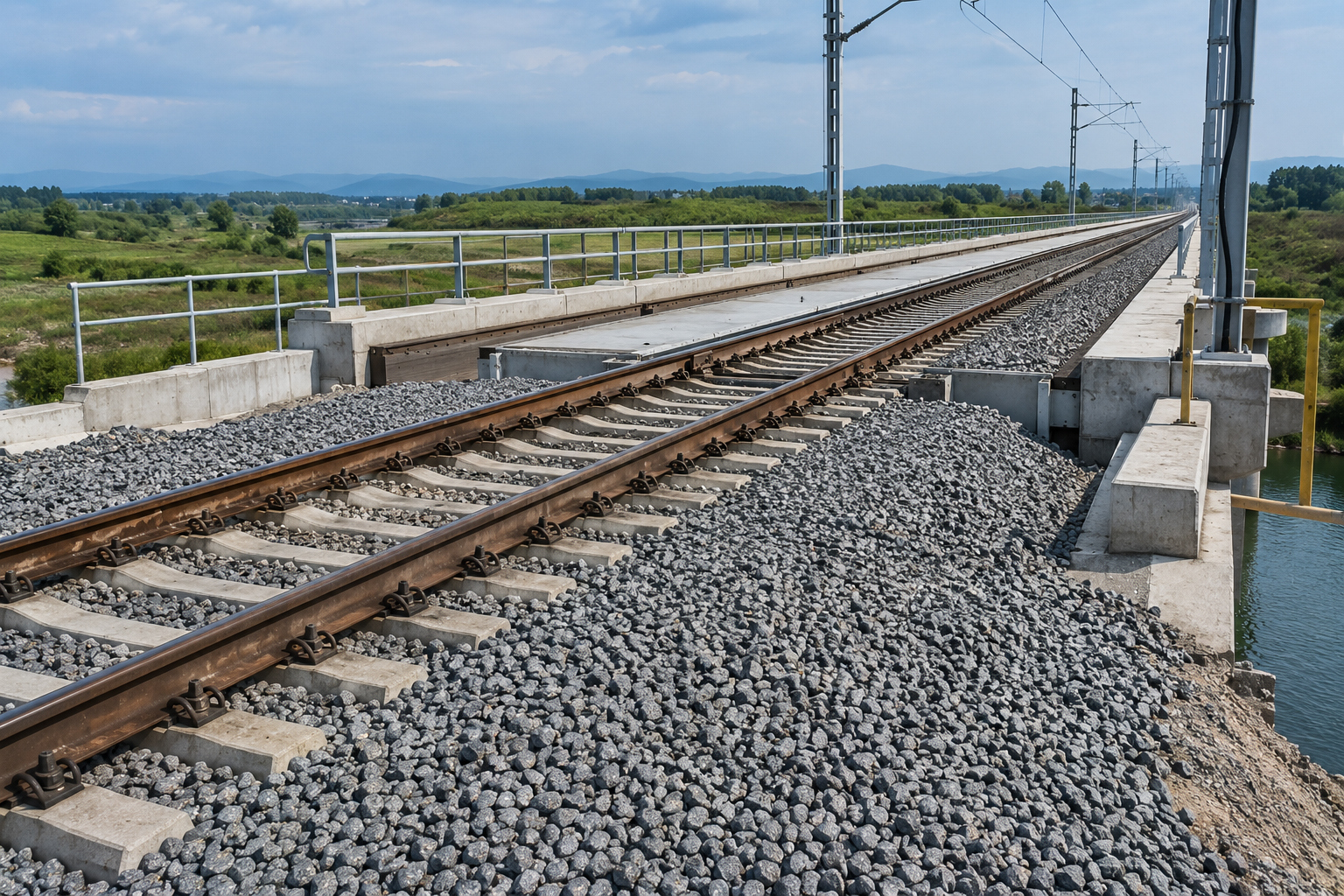
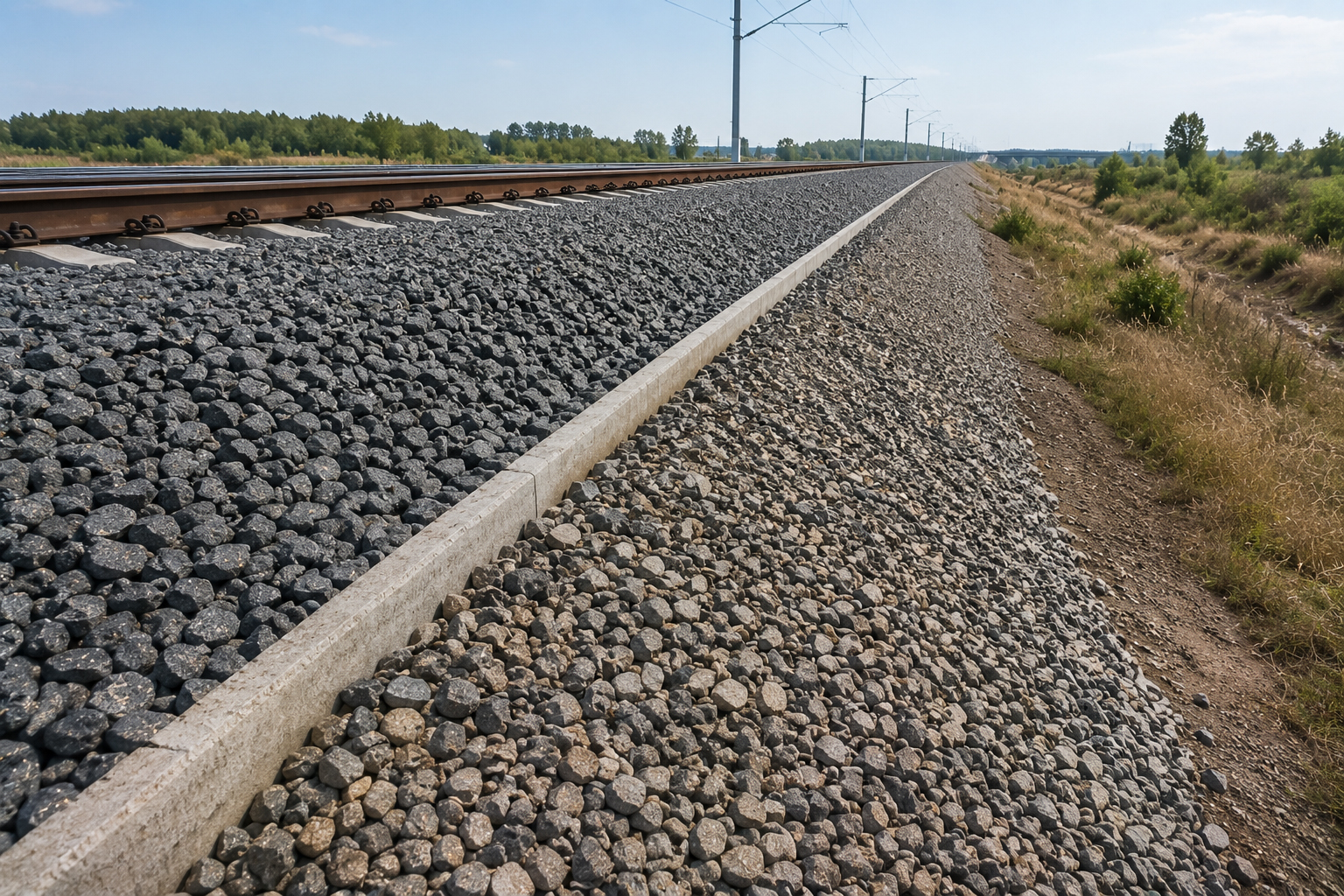
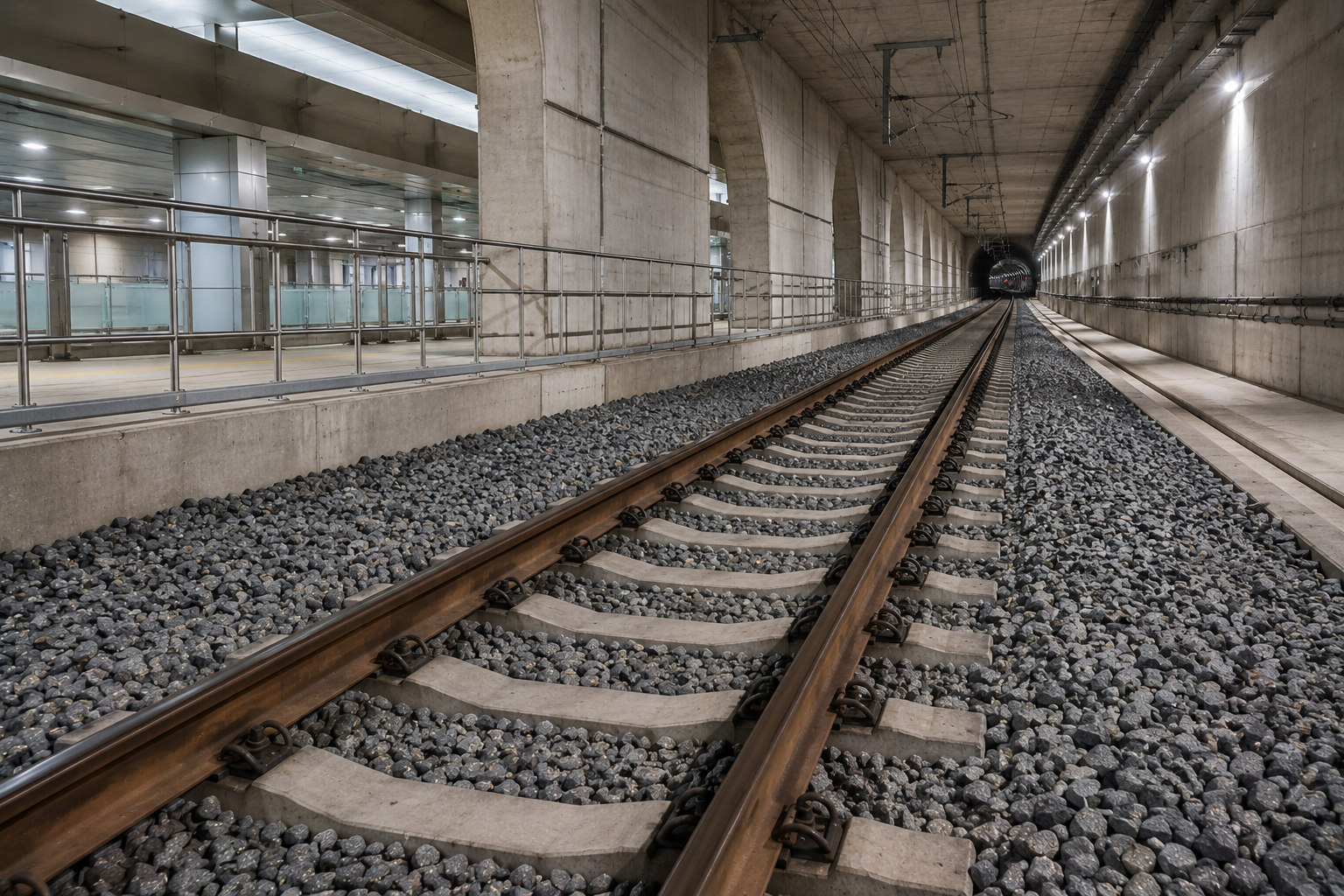
Where PUGLUE Ballast Adhesive Is Used
From high-speed lines to transition zones, PU-50D stabilizes ballast where movement, wear or noise are critical.
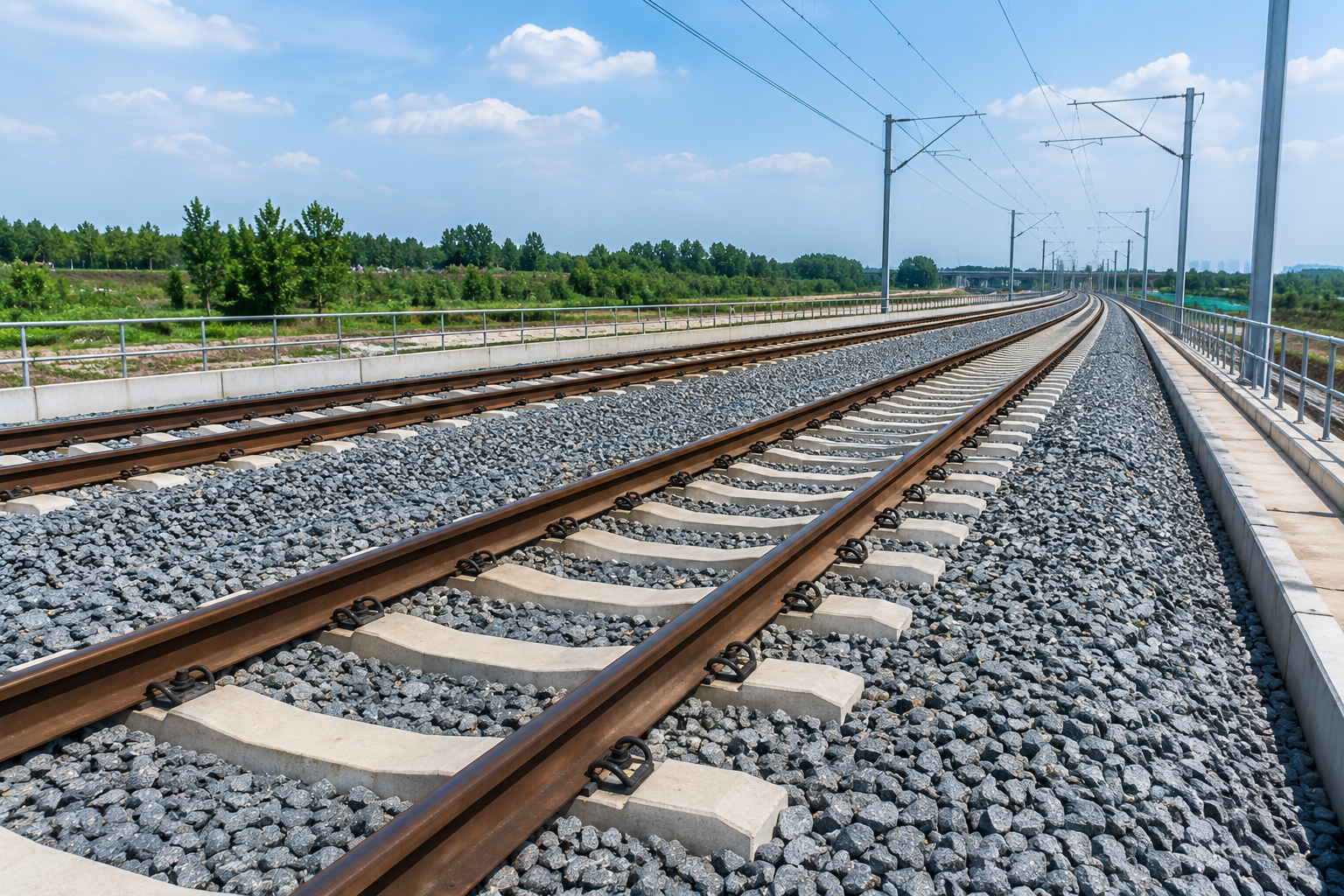
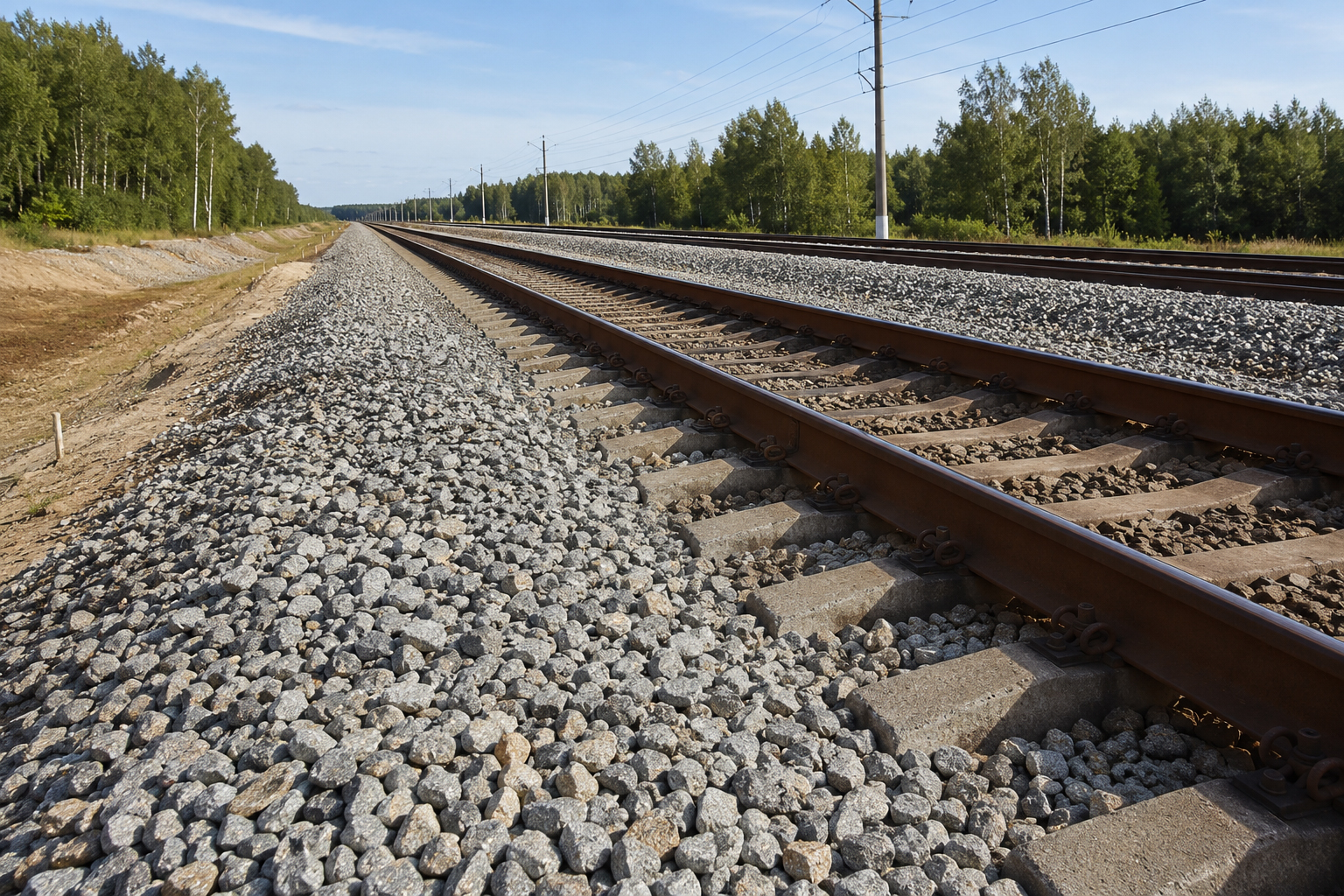
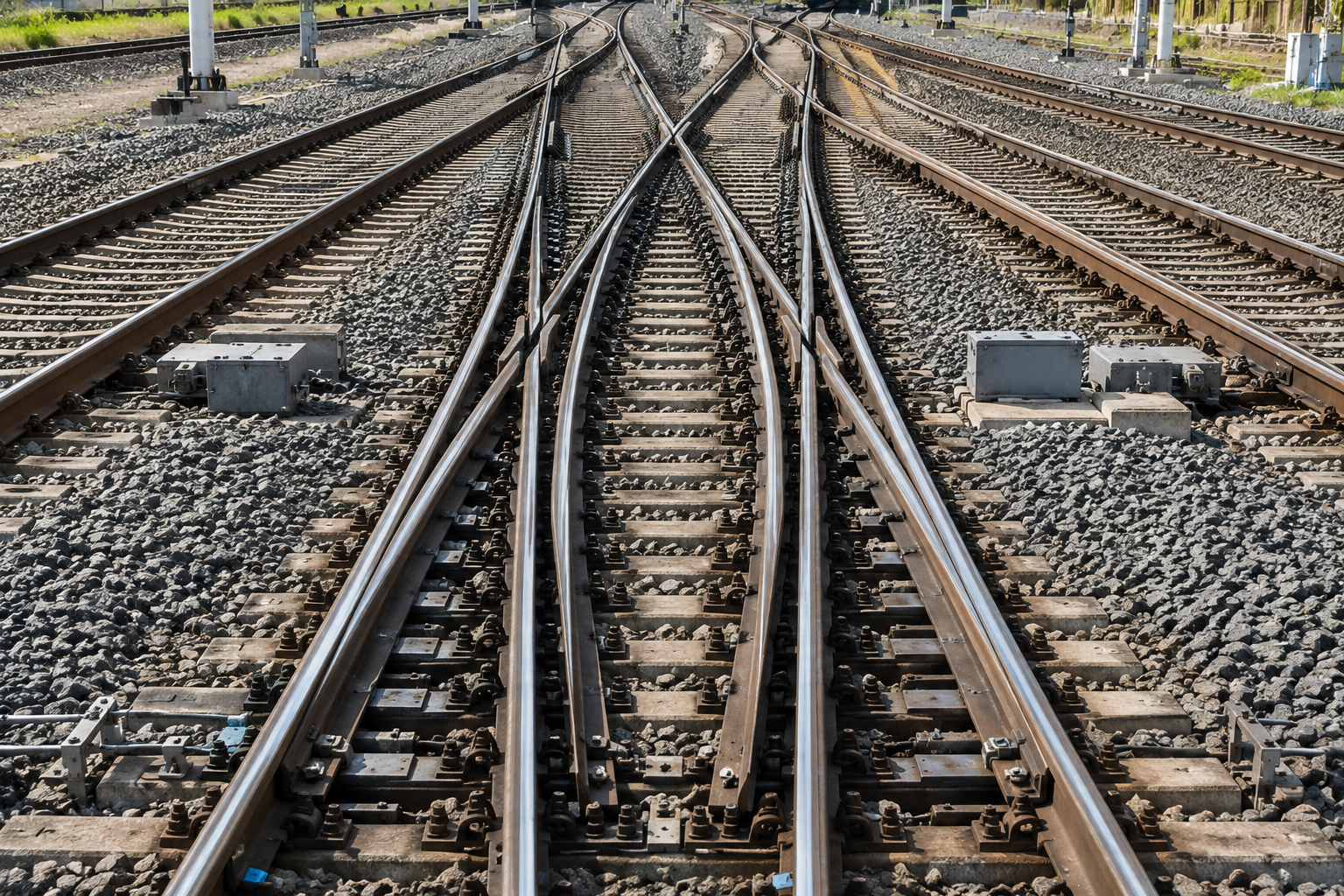
Engineered Performance
Stabilizing, permeable and tough — the profile rail ballast requires.
Anti-displacement
Bonds ballast into a stable bed that resists flight, churn and settlement.
Stays permeable
The cured glue line doesn’t block moisture or air, so the bed still drains freely.
Impact-resistant elastomer
Insoluble, non-melting hard elastomer withstands heavy dynamic impact without shattering the ballast.
Quiet & durable
Damps train noise; water- and cold-resistant for long outdoor service.
How to Apply PU-50D Ballast Glue
A two-component spray system — or manual mix for small areas and repairs.
Prepare the ballast
Rinse off mud, level the ballast and dry the surface in sun until water-free. Build in dry weather (5–35°C, no rain / fog / dust).
Meter-mix spray
Use a 2K spray rig with metering pumps (one pump per component); spray A : B = 3 : 2 onto the ballast so it penetrates ~30 cm.
Coverage ~23 L/m³
About 23 litres of adhesive per cubic metre of ballast; coat thick layers in batches and hand-level the surface.
Cure
Initial cure ~3 h, full cure ~24 h. Clean tools with ethyl acetate or xylene; do not add thinner.
For small areas or patching, mix A + B in a bucket and scoop / spread by hand — bucket pot life is only 10–15 min, so use it immediately.
Technical Parameters
Two-component PU-50D — representative values.
| Property | Value |
|---|---|
| Type | PU-50D two-component polyurethane |
| Appearance | Component A: light-yellow liquid |
| Viscosity | A: 3500 ± 100 mPa·s |
| Mixing ratio | A : B = 3 : 2 (no catalyst — cure not adjustable) |
| Solid content | 85% |
| Density | A: 1.00 ± 0.10 g/cm³ |
| Hardness | 70 ± 3 Shore D |
| Tensile strength | ≥15 MPa |
| Tear strength | ≥50 N/mm |
| Pot life | ≥15 min (100 g); 10–15 min mixed in a bucket |
| Cure | Initial ~3 h; full ~24 h |
| Coverage | ~23 L per m³ of ballast (penetration ~30 cm) |
| Packaging | A: 200 kg | B: 250 kg iron drums |
| Shelf life | 1 year (ambient, away from sunlight) |
Cured film is an insoluble, non-melting hard elastomer that keeps the bed permeable. Do not apply in rain or add thinner.
A Manufacturer You Can Build On
A dedicated polyurethane adhesive manufacturer — not a trading reseller — supplying rail and infrastructure contractors worldwide since 2010.
Consistent, tested quality
In-house QC on every lot so viscosity, hardness and strength stay repeatable.
Full technical support
TDS, free trial samples and spray-equipment guidance for your line and climate.
OEM & private label
Manufacturer-direct pricing, your branding and stable supply — no middleman.
Packaging, Samples & OEM Supply
Manufacturer-direct supply built around rail-project procurement.
Packaging
Component A in 200 kg and component B in 250 kg iron drums for project volumes.
Free trial sample
Trial samples with full TDS so you can validate bond and drainage before committing.
OEM / private label
Your brand, your spec — manufacturer-friendly volumes and repeatable batches.
Global export
Export-ready documentation and logistics support.
Frequently Asked Questions
Railway ballast adhesive (PU-50D) — technical answers.
What adhesive bonds railway ballast?
A two-component polyurethane — PUGLUE PU-50D (A : B = 3 : 2). Sprayed into the ballast, it cures to a tough, permeable elastomer that locks the stones against displacement while still letting the bed drain.
Does the glued ballast still drain?
Yes — the cured glue line does not block moisture or air, so the bed stays stable yet rainwater drains freely (no water-trapping or pumping).
How much adhesive per cubic metre?
About 23 litres of adhesive per cubic metre of ballast, sprayed to penetrate roughly 30 cm deep. Thick layers are coated in batches.
How is it applied?
Best applied with a two-component spray rig with metering pumps (one pump per component). For small areas or patching, mix A + B in a bucket and scoop / spread by hand — bucket pot life is only 10–15 min.
How strong and hard is it?
Tensile strength ≥15 MPa, tear strength ≥50 N/mm and hardness 70±3 Shore D — a hard elastomer that withstands heavy impact without shattering the ballast.
What is the cure time? Can I speed it up?
Initial cure ~3 h, full cure ~24 h. There is no catalyst, so the cure speed is not adjustable — it depends on mix amount, ratio and temperature.
Any weather or surface limits?
Build in dry weather at 5–35°C with no rain, fog, strong wind or dust; the ballast must be clean and dry. Do not add thinner.
What is the packaging and shelf life?
Component A in 200 kg and component B in 250 kg iron drums; shelf life is one year stored at ambient temperature, away from sunlight.
Do you also supply railway geotextile adhesive?
Yes — we supply a two-component geotextile bonding adhesive (mixed A : B = 4 : 1, ~675 g/m², ~0.5 mm film) for bonding geotextile to polyurea waterproofing or concrete. Contact us for its TDS.
The PUGLUE Grade for This Application
The matched binder grade for railway ballast stabilisation.

PU-50D — 2K Polyurethane Ballast Binder
Two-component polyurethane binder (A : B = 3 : 2) engineered for high-speed rail ballast bonding — the grade we recommend for track ballast stabilisation and shoulder consolidation.
View Product Details →Related Adhesives & Guides
Matched polyurethane binders and adhesives for infrastructure.